Wired Connection Guide

Available wired connection methods depend on your device combination. Use the guides below to set up USB Direct Connection or USB tethering.

View supported devices and features
USB Direct ConnectionMacAndroid

On Mac + Android, connect a data-capable USB cable to use Tab Display without Wi-Fi pairing or a connection code.

  • With the app running and USB auto-connect enabled, screen transmission starts when you connect the cable.
  • Supports touch and stylus input

What You'll Need

  • A Mac running Tab Display
  • An Android tablet running Tab Display
  • A USB cable that supports data transfer (charge-only cables won't work)
  • Tab Display 0.0.44 or later on Mac (we recommend the latest version of the Android app)

Tested Configuration (For Reference)

Tested with the following cable.

Cable: USB4.0-certified USB-C cable

Cable quality and specification can affect connection speed and stability. Lower-quality cables may cause an unstable connection or fail to be recognized at all — the cable above is just what we verified, not the only one that will work.

How to Set Up

1

Select USB Direct Connection

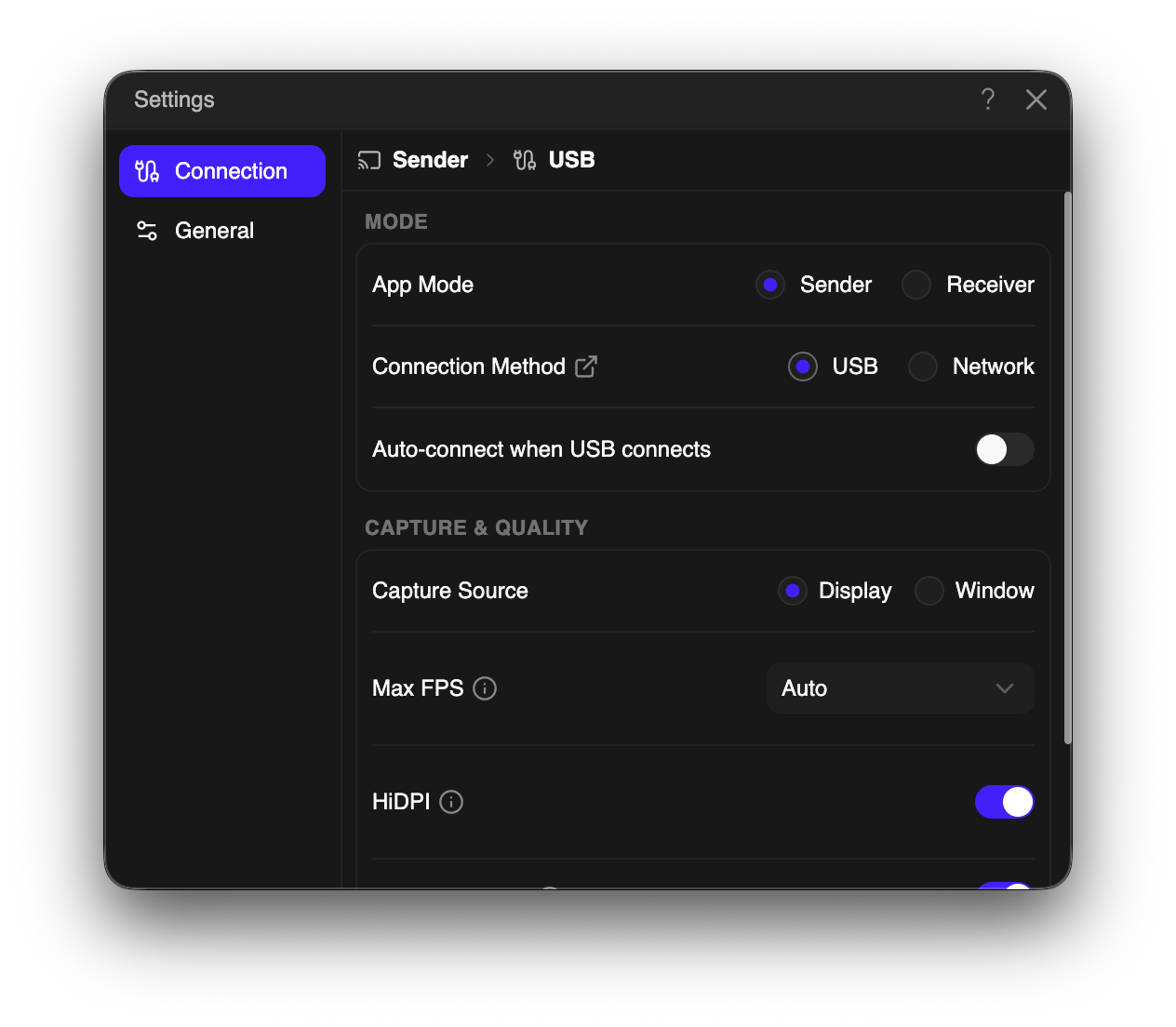
Run Tab Display on both devices. On the Mac, open Settings → Connection and select USB. Turn on Auto-connect when USB connects if you want screen transmission to start when the cable connects. Finish adjusting your settings, then close Settings. This option does not launch the app itself.
USB Direct Connection settings on Mac
2

Connect with a USB cable

Plug your Android tablet into your Mac with a USB cable. No Wi-Fi pairing or connection code needed.
3

Allow the connection on Android

When your tablet shows a prompt asking to allow the USB accessory, tap "Allow". This usually only appears the first time you connect.
4

Connection Complete

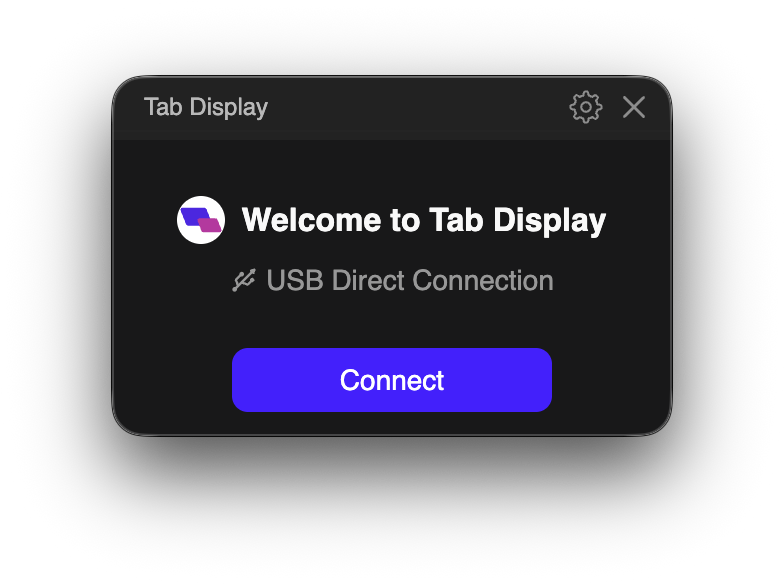
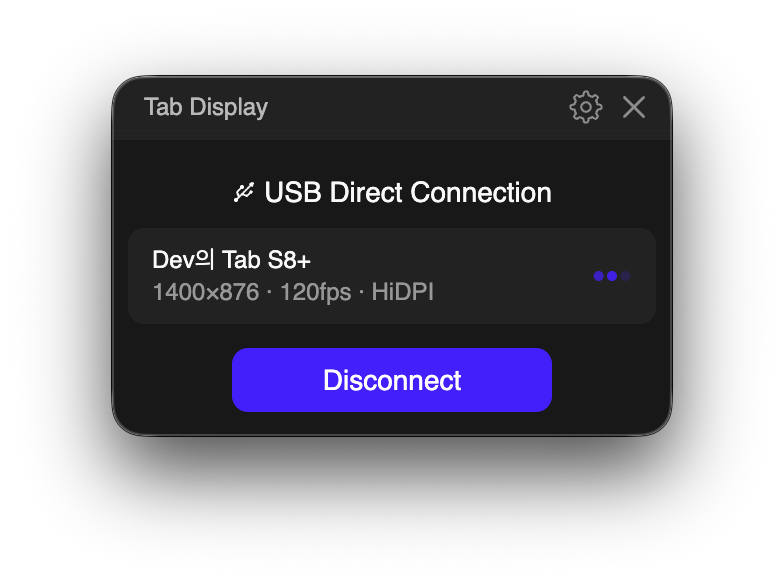
With auto-connect enabled, the connection starts automatically; otherwise, click Connect on the Mac. Display mode creates an extended display, while Window mode sends the window you select. Unplugging ends the connection. Plugging the cable back in reconnects automatically only when auto-connect is enabled.
The Mac app before starting a USB connection.
The Mac app shows the connected device and configured resolution and FPS. FPS is not a live measurement.

If the connection fails or the screen is black, check that both apps are running, USB is selected, and Settings is closed. Reconnect the cable, then click Connect if auto-connect is off.
Capture & Quality

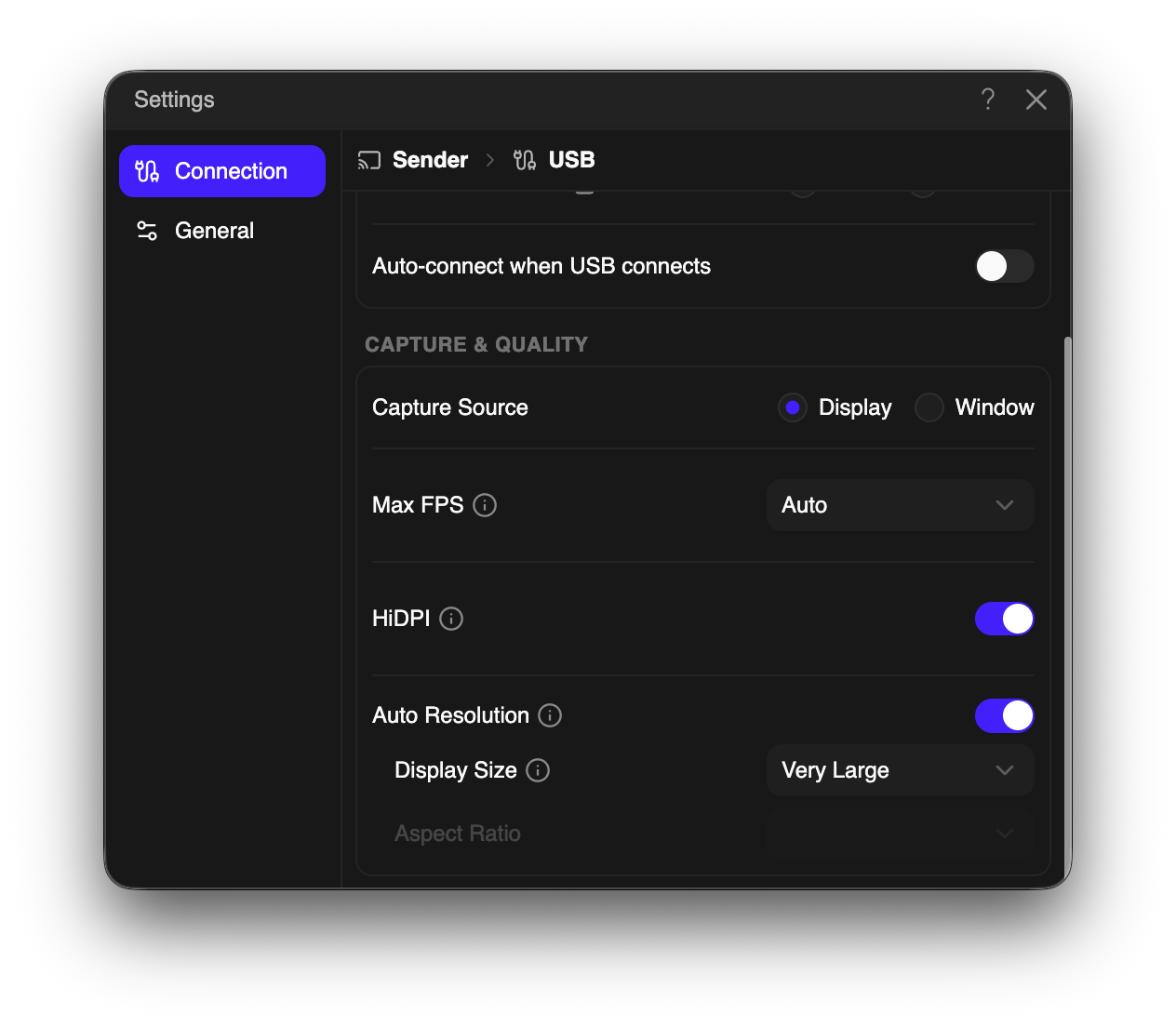
  • Max FPS (USB only): choose 30, 60, or Auto. Auto requests the refresh rate reported by the connected device. The actual frame rate may be lower, depending on resolution, HiDPI, and device performance.
  • HiDPI (macOS): Renders at double resolution to match the tablet's pixels, so text and images look sharp. Turning it off sends fewer pixels.
  • Display Size: Default (100% resolution) / Large (75% resolution) / Very Large (50% resolution). Sets the virtual screen's width and height as a percentage of the connected device's resolution. Lower percentages make text and icons larger, so less fits on the screen. The actual transmission resolution also depends on HiDPI.
USB Max FPS, HiDPI, and resolution settings on Mac

Unsupported Display Setting: the selected resolution or Max FPS may exceed the transmission limit of your setup. Lower the resolution or Max FPS in Settings and try again. The app does not lower your settings automatically.

Why do I see “Unsupported Display Setting”?

USB Tethering ConnectionWindowsiOSWindowsAndroidMac + iOS

For supported combinations other than Mac + Android, USB tethering creates a network over the cable and connects like Wi-Fi by entering a connection code.

  • Connects with just a cable — no extra adapters needed
  • Connects the same way as Wi-Fi, by entering a connection code
  • Uses a stable wired connection, rather than wireless bandwidth

What You'll Need

  • A USB cable compatible with your device

How to Set Up

1

Connect devices with USB cable

Connect your tablet to your computer using a USB cable.
2

Enable USB tethering on tablet

• iOS: Settings → Personal Hotspot → Enable 'Allow Others to Join'

• Android: Settings → Network & Internet → Hotspot & Tethering → Enable 'USB tethering'

3

Select tethered network in Tab Display

On your computer, open Tab Display settings and select the USB tethered network from the network list
4

Connect as usual

Follow the standard Tab Display connection procedure to connect both devices

Connect over a network